Shelf News
Why the Trader Joe's plumcot you bought in July is not the one on the shelf now
Trader Joe's sells Plumcots at $3.69 a pound under one label, but the actual variety rotates with the harvest. Here is why the fruit changes and how to pick.
By finds editorial · 4 min read ·
produce aisle · same sign, different fruit
$3.69 / LB
The sign stays. The fruit does not.
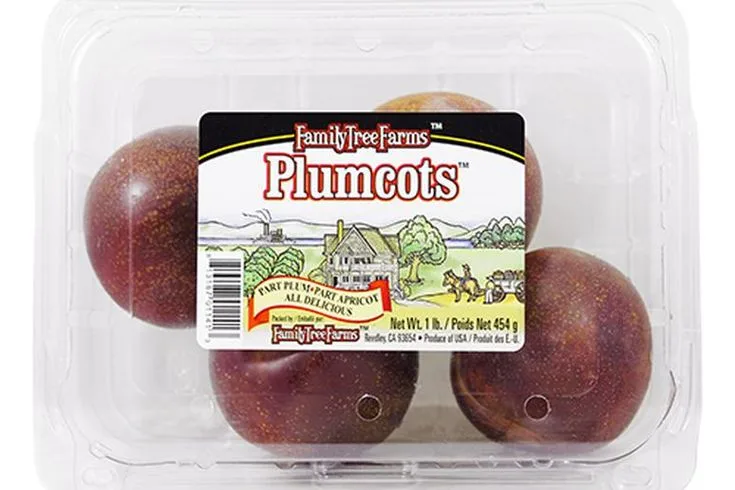
The produce bin at Trader Joe's says Plumcots, and it will say Plumcots for as long as the fruit is in season. What actually sits under that sign is a moving target, and Trader Joe's has said so itself. On Episode 91 of the Inside Trader Joe's podcast, the company explained that different plum-apricot hybrid varieties ripen at different points through the summer, that it brings in whatever it can get freshest and ripest, and that the exact variety may change week to week.
The examples Trader Joe's named on that episode were Eagle Egg, Plum-O-Granite, Summer Punch, and Jubilee. Those are varieties a shopper might encounter, not a list of what is in your store this week. The point is the mechanism: the label is a category, and the harvest decides the rest.
the current record
Trader Joe's product catalog
One SKU, many fruits
Plumcots · $3.69
The current catalog record is the generic listing: Plumcots, SKU 098659, one pound for $3.69, from a Trader Joe's catalog snapshot captured August 14, 2026. That price and pack are the stable part. The variety inside the pack is whatever was ripest when the buyer called the grower, which is exactly why the same sticker can taste noticeably different from one trip to the next.
- plum-apricot hybrid
- sold by the pound
- variety rotates
finds verdictThe sticker names a category, not a variety. The small print on the bin, sticker, or pack is where the actual fruit is identified.
The catalog remembers three earlier names
The rotation is not a theory; it has left records. The Finds catalog holds exact prior Trader Joe's listings for three named varieties: Plumcot Dapple Dandy, Golden Treat Plumcot, and Plumcot Plumogranate. All three were marked unavailable in both the July 28 and August 14, 2026 catalog snapshots, so they are history rather than current stock. What they prove is that Trader Joe's has sold specific, named plumcot varieties before, and that those names come and go while the generic Plumcots listing carries on.
All three of those varieties belong to Family Tree Farms, the California grower whose branding also appears on the current one-pound Plumcots pack. The grower publishes harvest windows for each one, and lining them up shows why the bin keeps changing.
the grower calendar
How the varieties hand off through summer
- 01
late June to mid-July
Plumogranate leads off
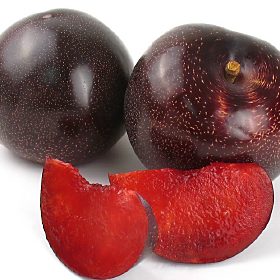
Family Tree Farms dates Plumogranate, its deep red early variety, to late June through mid-July. If you loved a plumcot in early summer, this window is a likely suspect.
- 02
early to mid-July
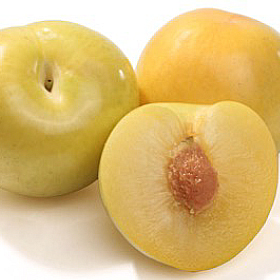
Golden Treat overlaps
Golden Treat runs early through mid-July in the grower's guide, overlapping the tail of the Plumogranate window before handing off in turn.
- 03
mid-July through August
Dapple Dandy closes the season
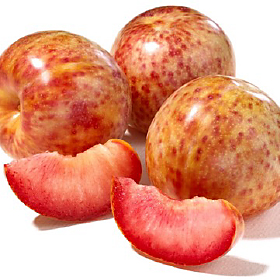
Dapple Dandy, the speckled variety, carries the label from mid-July through August in the grower's calendar. A late-summer plumcot is a different fruit than an early-summer one, on paper and on the palate.
How to pick
Because the varieties trade places, last month's memory is not evidence of what is in the bin today. The useful move is simple: read the tiny variety line on the bin sign, the fruit sticker, or the pack before you buy. If a name is printed there, you know exactly which fruit you are getting, and you can go back for the same one while its window lasts.
One more calibration. Those harvest windows are the grower's published availability, not Trader Joe's delivery schedule, and weather can move them. They explain the handoff; they do not promise which variety your particular store received this week. The bin gets the final word.